For millions of people across Bihar, Jharkhand, eastern Uttar Pradesh, and the global Bihari diaspora, Chhath Puja is not just a religious event. It is a homecoming. It is a promise kept to the Sun God. It is the smell of ghee and jaggery rising from earthen stoves at dawn. And at the center of it all, quietly holding the entire festival together, sits a golden-brown disc of pure devotion: Thekua.
If you have ever wondered why this simple sweet snack commands so much reverence during Chhath, this guide is for you. We will explore the festival, its rituals, and the sacred bond between Chhath Puja and Thekua – the khasta Bihari sweet that is far more than just a snack.
What is Chhath Puja? The Ancient Festival of the Sun
Chhath Puja is one of the oldest religious traditions in India, with roots stretching back to the Rigvedic era . It is a Vedic festival dedicated to Surya, the Sun God, and Chhathi Maiya, the goddess believed to be Surya’s sister or younger wife .
The word “Chhath” comes from the Sanskrit word “Shashthi,” meaning sixth. The festival is celebrated on the sixth day of the Hindu lunar month of Kartik, which typically falls in October or November, just a few days after Diwali .
Unlike most Hindu festivals, Chhath Puja involves no idol worship. There are no priests, no temples, and no written scripture. It is a festival of the people, passed down orally through generations, primarily by women who sing folk songs in Maithili, Bhojpuri, and Awadhi . The rituals are based on a simple but profound idea: gratitude to the Sun for sustaining all life on Earth.
The Government of India has even nominated Chhath Puja for UNESCO’s Intangible Cultural Heritage list, recognizing its unique blend of devotion, community, and ecological harmony .
Chhath Puja is Celebrated For: Health, Prosperity, and Family
Why do millions observe this grueling 36-hour fast, standing in cold water at riverbanks before sunrise and after sunset? The reasons are deeply personal and profoundly spiritual.
Devotees observe Chhath Puja to seek blessings for the health, prosperity, and well-being of their families. Mothers fast for the long life of their children. Families pray for harmony and abundance. The festival is also an expression of gratitude to the Sun God for the gifts of life and energy .
There is a lesser-known but beautiful dimension to Chhath: it is an agrarian prayer. The festival is a thanksgiving for agricultural prosperity, a way for farming communities in Bihar to honor the sun, soil, and water that make their harvests possible .
The Four Days of Chhath Puja: A Journey of Discipline and Devotion
Chhath Puja is celebrated over four days, each with its own ritual and significance .
Day 1: Nahay Khay (Bath and Eat)
The festival begins with a ritual bath, traditionally in a sacred river or pond. Devotees cleanse their bodies and homes, then prepare a simple, sattvik meal of rice, chana dal, and kaddu (bottle gourd) . This is the last solid meal before the arduous fast begins.
Day 2: Kharna (The Sweet Offering)
On Kharna, devotees observe a waterless fast from sunrise to sunset. In the evening, they prepare a special prasad of jaggery kheer (rice pudding) and roti, cooked in earthen pots over a wood fire . After offering this to Chhathi Maiya, they consume it, marking the beginning of a 36-hour Nirjala (waterless) fast.
Day 3: Sandhya Arghya (Offering to the Setting Sun)
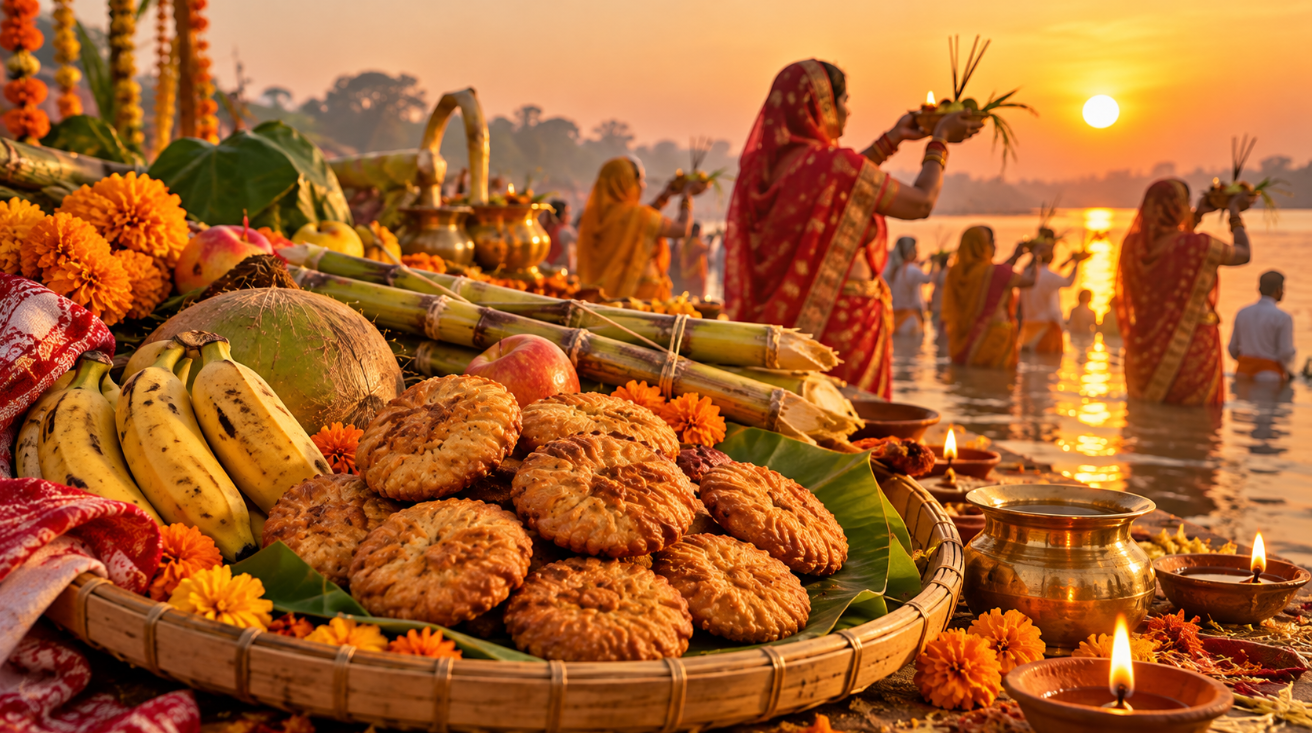
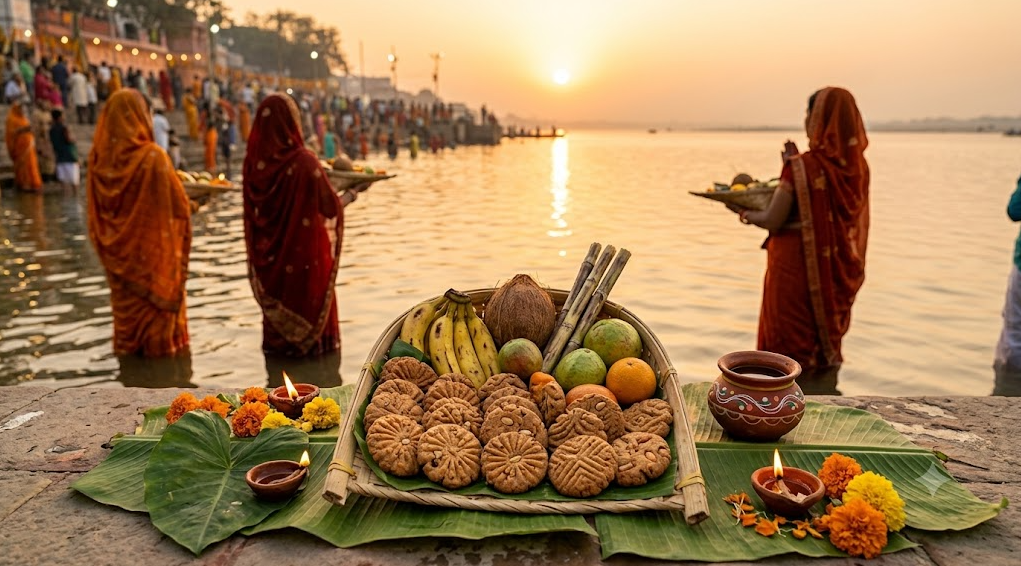
This is the most visually spectacular day. Entire families gather at ghats, dressed in their finest. Devotees stand knee-deep in water, facing the setting sun, and offer arghya – a mixture of water, milk, and flowers – from bamboo soops (winnowing baskets) . The soop contains the sacred prasad: Thekua, fruits, sugarcane, and coconut.
Day 4: Usha Arghya (Offering to the Rising Sun)
The final day begins before dawn. Devotees return to the ghats to offer arghya to the rising sun, completing the cycle of gratitude . After this final offering, the 36-hour fast is broken with prasad and water, a ritual known as Parana. The festival concludes with a deep sense of fulfillment and community.
Thekua: The Prasad That Defines Chhath
Now we arrive at the heart of it all.
Thekua is not just one of many items in the Chhath soop. It is the main prasad, the sacred offering that gives the festival its distinctive culinary identity . In homes across Bihar, the making of Thekua is as sacred as the puja itself.
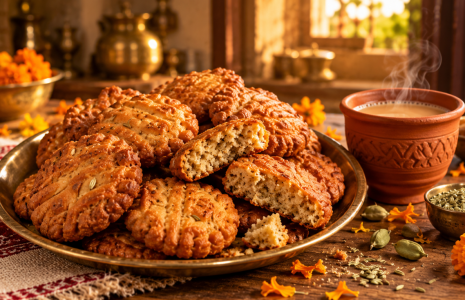
Thekua is a traditional deep-fried sweet snack made from whole wheat flour, pure desi ghee, and jaggery . Fennel seeds and cardamom add warmth and aroma. The dough is hand-pressed using a wooden mold called a saancha, then slow-fried in ghee until golden brown .
But Thekua is more than ingredients. It is symbolism. Its circular shape represents the Sun itself – the very deity being worshipped . The wheat comes from the earth, and the jaggery from sugarcane, making Thekua an offering of the earth’s bounty back to the source of all life.
This is why Thekua is the heart of Chhath Puja. It is the physical embodiment of gratitude. When a devotee offers Thekua to the Sun God, they are offering the purest, most honest product of their land and labor.
Why Thekua is Better Than Store-Bought Sweets for Chhath
In recent years, some families have started buying ready-made sweets for Chhath prasad. But traditionalists know the difference.
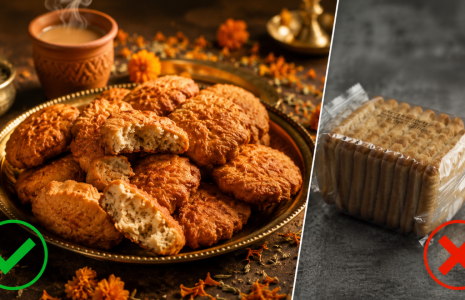
Authentic Thekua is made with pure desi ghee – no vanaspati, no palm oil. It contains zero preservatives and no artificial colors. It stays fresh for weeks naturally, thanks to its low moisture content. And most importantly, it is made with devotion.
When you make Thekua at home, you are not just preparing food. You are participating in a centuries-old tradition. You are joining millions of hands that have pressed the same dough, shaped the same discs, and offered the same prayer.
Chhath Puja Fruits List: What Goes in the Soop
While Thekua is the star, the Chhath soop contains a carefully curated list of seasonal fruits and offerings. Here is what you will typically find :
| Fruit/Item | Significance |
|---|---|
| Banana | Most significant fruit of the festival; dear to Chhathi Maiya |
| Coconut (Sri Phal) | Symbol of purity and completeness; invokes Lakshmi’s blessings |
| Sugarcane | Represents fertility, prosperity, and sweetness in the family |
| Water Chestnut (Singhara) | Seasonal fruit, believed to bring prosperity |
| Suthni | A sacred tuber, pure and medicinal |
| Pomelo (Dabh Lemon) | Large citrus fruit, considered dear to Chhathi Maiya |
| Apple, Guava, Pineapple | Seasonal fruits offered as part of the prasad |
At least five fruits are needed for the soop, but families often include more .
Chhath Puja Celebration: A Community Affair
What makes Chhath Puja truly special is that it is entirely people-led . There are no priests to mediate, no central authority to dictate. The rituals are passed down orally, primarily through women, whose folk songs carry the wisdom of generations.
The festival also carries a powerful ecological message. Everything used in Chhath – bamboo soops, clay lamps, earthen pots, seasonal fruits – is natural and biodegradable. Devotees clean riverbanks before the festival. They repair ghats by hand. Chhath is not just worship of the Sun; it is a celebration of the Earth that sustains us .
Chhath Puja is Celebrated Where?
While Chhath is most deeply rooted in Bihar, Jharkhand, and eastern Uttar Pradesh, it is now celebrated wherever the Bihari diaspora has settled . You will find Chhath ghats in Delhi, Mumbai, Mauritius, Fiji, Trinidad and Tobago, the UK, the US, and the UAE. The festival travels with its people.
About Chhath Puja: The Date for 2026
For those planning ahead, Chhath Puja in 2026 will be celebrated from November 13 to November 16 .
| Day | Date (2026) | Ritual |
|---|---|---|
| Day 1 | November 13 (Friday) | Nahay Khay |
| Day 2 | November 14 (Saturday) | Kharna |
| Day 3 | November 15 (Sunday) | Sandhya Arghya |
| Day 4 | November 16 (Monday) | Usha Arghya & Parana |
Conclusion: The Taste of Devotion
Chhath Puja is not just a festival. It is a discipline. A sacrifice. A promise between humanity and nature. And at the center of this ancient promise sits a simple, golden-brown disc of Thekua – made with wheat from the earth, jaggery from the sugarcane, and ghee from the cow.
When you bite into authentic Thekua, you taste more than sweetness. You taste history. You taste devotion. You taste home.
Whether you are preparing for Chhath Puja 2026 or simply craving a taste of Bihar’s most beloved snack, Bihari Thekua Online brings you authentic, handcrafted Thekua made with pure desi ghee, zero preservatives, and generations of tradition.
Taste the tradition. Taste the devotion. Taste Thekua.
Frequently Asked Questions
What is Chhath Puja?
Chhath Puja is an ancient Vedic festival dedicated to the Sun God (Surya) and Chhathi Maiya, celebrated primarily in Bihar, Jharkhand, and eastern Uttar Pradesh. It involves a 36-hour waterless fast and offerings to the setting and rising sun .
Why is Thekua important in Chhath Puja?
Thekua is the main prasad offered during Chhath. Its circular shape symbolizes the Sun, and it is made from pure, natural ingredients as an offering of gratitude to the Sun God .
What fruits are offered in Chhath Puja?
Common fruits include banana, coconut, sugarcane, water chestnut, suthni, and pomelo. At least five fruits are typically included in the soop .
When is Chhath Puja in 2026?
Chhath Puja 2026 will be celebrated from November 13 to November 16 .
Where can I buy authentic Bihari Thekua online?
You can buy authentic Bihari Thekua from Bihari Thekua Online, made with pure desi ghee and delivered fresh across India and internationally.